Every small team’s stack starts the same way. Someone needs to compress a PDF, so they Google it and use the first result. Someone else needs to send a 2 GB video, so they grab a free transfer service. A third person sets up a free project board because the trial of the paid one expired. Nobody made a decision. The stack just accumulated.
Eighteen months later, the team is running a dozen tools nobody chose, half of them free, none of them talking to each other — and the invoice for that, when it finally arrives, doesn’t look like an invoice at all.
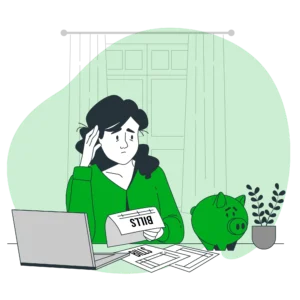
Free is a business model, not a favour
It helps to know which kind of free you’re looking at, because each one bills you differently.
Ad-funded free
You are the audience. The tool is fine, the workflow is interrupted, and the ad network sitting inside the page knows what you uploaded and when. On a PDF site, that means a third party gets a signal every time you handle a contract.
Data-funded free
You are the product. Your uploads, your documents, and increasingly your text are used to build something else — profiling, resale, or model training. The terms of service usually say so, in a clause nobody reads, granting a broad licence to “process” whatever you put in.
Freemium free
You are a lead. The free tier is deliberately shaped like a trap: generous enough to build your workflow inside it, restrictive at exactly the point where leaving becomes expensive. Export is often the first thing behind the paywall.
Venture-funded free
You are a growth metric. The tool is genuinely good and genuinely unprofitable, subsidised by investors until the day it isn’t. Then it gets acquired, repriced, or shut down — and your data goes with it.
Actually free
Some things really are free, because they cost the provider almost nothing to run: a tool that works entirely in your browser has no servers to pay for, no storage bill, no processing cost. This category exists. It’s just smaller than the marketing suggests.
The five costs nobody puts in the spreadsheet
1. The compliance cost. A free tool almost never comes with a Data Processing Agreement. If an employee uploads a customer contract, an employee record, or a signed NDA to a free service, that is a data transfer — one your DPA register doesn’t know about, one your DPO can’t document, and one you can’t undo. Under GDPR, “the intern used a free website” is not a defence. Free tools are the single biggest source of shadow IT in small companies, precisely because they never touch procurement.
2. The exit cost. Free tiers rarely include proper export. You can get your data out as a screenshot, a scraped CSV, or a weekend of copy-paste — but not as a clean, structured file. The longer a team works inside a free tool, the higher the price of leaving it, which is exactly the point of the design.
3. The continuity cost. No payment means no contract, no SLA, and no obligation to keep the lights on. Free services are shut down constantly, often with thirty days’ notice, sometimes with none. Google alone has retired well over two hundred products. When a paid tool dies, you get a migration path. When a free one dies, you get an email.
4. The attention cost. This is the one that hurts most and shows up least. Twelve tools mean twelve logins, twelve notification streams, twelve places a file might be, and twelve small moments of “wait, where did we put that?” Say each tool costs the team twenty minutes a week in switching, searching, and re-explaining where things live. Across a five-person team, that’s around twenty hours a month spent on tool overhead — more than the annual cost of most paid suites, paid in the most expensive currency you have.
5. The trust cost. Sending a client a file through an ad-covered free service, or asking them to sign a document on a platform you can’t explain, says something about how you handle their data. Usually not the thing you want it to say.
Where "free" is genuinely fine
None of this means paying for everything. Free is the right answer more often than vendors would like to admit — you just want to know why it’s free before you commit anything important to it.
Free is usually safe when:
- The tool runs locally. If processing happens in your browser and the file never reaches a server, there’s nothing to monetise and nothing to leak. Check the network tab if you want proof.
- You’re using it once. A one-off conversion of a non-sensitive file doesn’t need a procurement process.
- The free tier is a real product, not a demo. Some providers make one seat or one workspace free permanently because it’s cheap marketing, not because they intend to squeeze you later. Look for a published, unlimited-time free tier rather than a countdown.
- Nothing confidential goes in. Marketing copy, public PDFs, draft blog posts — low stakes, low risk.
Free stops being fine the moment contracts, personal data, financial records, client IP, or anything you’d have to report on a breach form goes into it.
Six questions before you adopt a free tool
Before a free tool becomes part of how your team works, five minutes of checking is worth more than five months of cleanup:
Why is it free? If you can’t answer this in one sentence, that’s the answer.
Where does the file go? Client-side processing means it goes nowhere. Server-side means a copy exists somewhere, under someone else’s jurisdiction, for a retention period you didn’t set.
Is there a DPA? If the provider doesn’t offer a Data Processing Agreement, the tool cannot legally handle personal data for your business. This is not negotiable and takes thirty seconds to verify.
What does the licence clause say? Search the terms for “licence” and “your content.” A broad, perpetual, sublicensable licence to your uploads is a red flag, however friendly the landing page looks.
Can you export everything, today, for free? Try it before you migrate anything in. If export sits behind the paywall, you’re not evaluating a tool — you’re being onboarded into one.
Who’s behind it? A named company with a legal address and a jurisdiction is a very different proposition from an anonymous site with a contact form.
Where DailyBuddy fits in
DailyBuddy was built with a fairly blunt position on this: be honest about what’s free and why.
- The PDF tools are free because they cost nothing to run. 26 of 30 PDF tools work entirely in your browser. The file never reaches a server, so there’s no upload, no retention, no processing to monetise — and no ads paying for it.
- The first user is free forever. Not a 14-day trial, not a countdown. A real free tier for freelancers and solo users, because it’s cheaper than an ad budget.
- No hidden premium tiers. After the free seat, it’s €9 per user per month (yearly) with everything included — projects, tasks, forms, encrypted file transfer, document signing. No feature you build on and then lose.
- Export isn’t behind a paywall. Your data belongs to you at every tier. Leaving should be as easy as arriving.
- EU jurisdiction by default. The company is headquartered in Germany, hosting is exclusively on EU servers, and there’s a DPA — so the compliance cost of the free tools stays at zero too.
It’s one system instead of twelve tabs, which is really the point: the cheapest tool is the one that replaces four others.
What to do this quarter
You don’t need a full audit. Three steps will surface almost everything:
1. List every free tool the team actually uses. Ask, don’t guess — most of them were never announced. Browser history and bookmark bars are more honest than any inventory.
2. Flag the ones that touch sensitive data. Contracts, HR files, client documents, anything with personal data. For each: is there a DPA, and where does the file go? The ones that fail both questions are your real risk, regardless of how convenient they are.
3. Consolidate the rest. Most teams find three or four free tools doing overlapping jobs badly. Replacing them with one tool you actually chose usually costs less than the time currently spent working around them.
Free tools aren’t the enemy. Unexamined ones are. The teams that stay fast are the ones who can answer a simple question about every tool in their stack: why is this free, and what am I paying instead?
Ready to trade twelve free tools for one you chose?
Projects, tasks, forms, PDF tools, encrypted transfer, and document signing in a single system — built in Germany, hosted in the EU, with a free tier that stays free.